


Compound interest is the reason a modest amount saved today can outgrow a much larger amount saved later. Here is how the math works, and how to make it work for you.
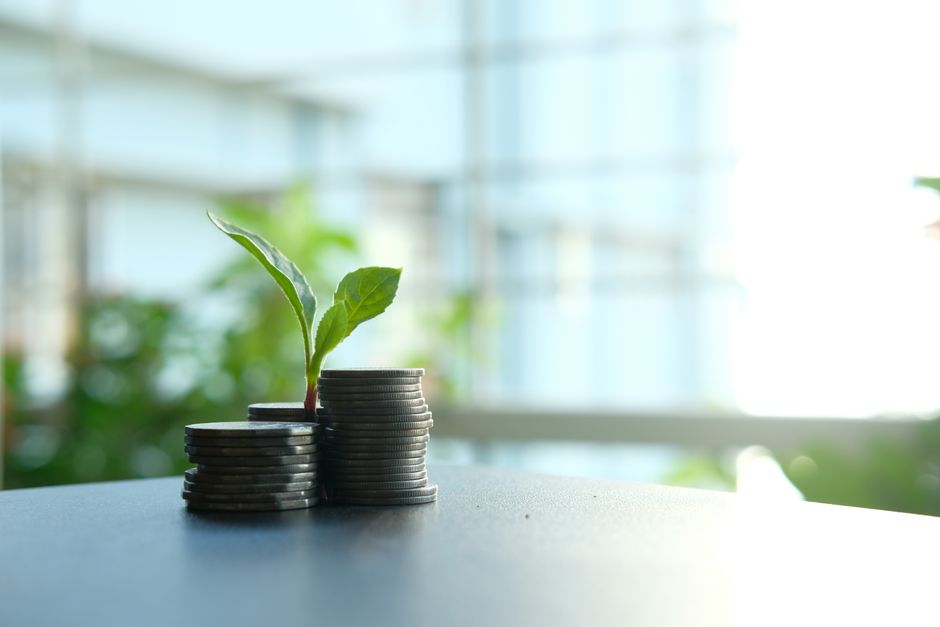
What “interest on your interest” really means
Simple interest pays you only on the money you originally put in. Compound interest pays you on your original deposit and on every dollar of interest that deposit has already earned. Each period, the base your return is calculated from gets a little bigger, so your growth accelerates instead of staying flat.
Say you put $1,000 into an account earning 7% a year. After the first year you have $1,070. In year two, the 7% applies to $1,070, not $1,000, so you earn $74.90 instead of $70. The extra $4.90 looks trivial, but that same effect repeats and stacks on itself for as long as the money stays invested.
The gap widens dramatically over decades. That $1,000 does not just add $70 a year forever. Left alone at 7%, it grows to about $1,970 in ten years, roughly $3,870 in twenty, and more than $7,600 in thirty, without you adding a cent. That curve bending upward is compounding at work.
A shortcut called the Rule of 72 lets you estimate this in your head: divide 72 by your annual rate to see roughly how many years it takes your money to double. At 6% that is about twelve years; at 9% it drops to eight. Small differences in rate change the doubling time more than most people expect.
The three levers that decide how fast money compounds
Three variables control how powerful compounding becomes: the rate of return, the length of time, and how often interest is added. Knowing how each one pulls its weight helps you focus on what you can actually control.
Time is the heaviest lever, and it is mostly free. Because growth builds on prior growth, the earliest dollars you invest do the most work. Someone who invests $300 a month starting at 25 can finish near $787,000 by age 65, while someone investing the same $300 a month starting at 35 reaches only about $366,000, even though the late starter skipped just ten years of deposits.
Rate matters, but chasing it adds risk. A high-yield savings account might pay a few percent with essentially no risk, while a diversified stock portfolio has historically returned more over long stretches, with real ups and downs along the way. When comparing savings accounts, look at APY rather than APR, because APY already bakes in the effect of compounding.
Frequency is the smallest lever but still real. Interest compounded daily grows slightly faster than the same rate compounded once a year. It is why a card quoting a 22% APR actually costs a bit more than 22% over twelve months once daily compounding is applied, pushing the effective rate closer to 24.6%.
When compounding works against you
Compounding is indifferent to which direction it runs. On a credit card, the same mechanism that grows your savings grows your balance, and card issuers typically compound interest daily on what you owe.
Here is the trap. Most cards calculate a daily periodic rate by dividing the APR by 365, then apply it to your balance every single day, including on interest already charged. Carry a $5,000 balance at 22% APR and pay only the minimum, and it can take well over a decade to clear, costing you several thousand dollars in interest before it is gone.
Because it works against you, high-interest debt usually deserves priority over investing. A guaranteed 22% you avoid by paying down a card beats the uncertain return most investments offer. Two tools can slow the compounding while you dig out: a balance-transfer card with a temporary low or 0% APR window, and a fixed-rate personal loan that converts revolving debt into a set payoff schedule. Both only help if you stop adding new charges.
Keep in mind that opening or closing accounts to manage debt touches your FICO score. A new balance-transfer card can lower your average account age and add a hard inquiry, while paying down balances cuts your credit utilization, which Equifax, Experian, and TransUnion all weigh heavily. The utilization improvement usually outweighs the small, temporary ding.
Putting compounding to work in real accounts
To harness compounding, you mostly need to take the decision out of your own hands. Automatic transfers into a savings or investment account on payday mean the compounding starts sooner and never depends on you remembering to move money.
Tax-advantaged accounts amplify the effect because you are not handing a slice of each year’s growth to taxes. If your employer offers a 401(k) match, contributing enough to capture the full match is close to a pure win, since the match itself becomes principal that immediately compounds. A Roth IRA lets your gains grow and later come out tax-free, so decades of compounding are never taxed at all.
For cash you may need soon, a high-yield savings account or money-market account lets even your emergency fund compound at a competitive APY while staying liquid. It will not build wealth by itself, but it beats leaving the same dollars in a checking account earning close to nothing.
Reinvesting matters as much as depositing. When a fund pays a dividend or an account pays interest, funneling that money right back in keeps the base growing. Choosing automatic dividend reinvestment, rather than pocketing the cash, is often what separates simple growth from compound growth in a brokerage account.
Mistakes that quietly cancel out compounding
A few habits quietly erase years of compounding, and they are easy to miss because the damage never shows up on a statement. What you give up is not a visible line item; it is the growth that would have happened but now never will.
The costliest is cashing out. Withdrawing from a retirement account when you change jobs, instead of rolling it over, does not just cost the balance and any penalties; it wipes out every future year that money would have compounded. A modest $10,000 cashed out at 30 could have grown to more than $76,000 by 60 at 7%. The receipt shows $10,000, but the real price is the growth you never see.
Fees are the silent counterweight. A 1% annual fee does not sound like much, but it compounds against you exactly as returns compound for you. Over 30 years, that small percentage can quietly consume a meaningful share of your ending balance, which is why low-cost index funds have become a default for long-term investors.
Inconsistency hurts too. Compounding rewards uninterrupted time, so pausing contributions or pulling money out during a market dip and locking in the loss breaks the chain. The people who benefit most are rarely the ones who invest perfectly; they are the ones who leave the money alone and let time do the heavy lifting.